Beyond the Beach: Discovering St. Lucia’s Volcanic Heart
Look, I get it. When most people think about St. Lucia, they picture themselves lounging on pristine white sand beaches, sipping rum punch under a palm tree, with those iconic Pitons rising dramatically in the background. And sure, that’s amazing. I did plenty of that too.
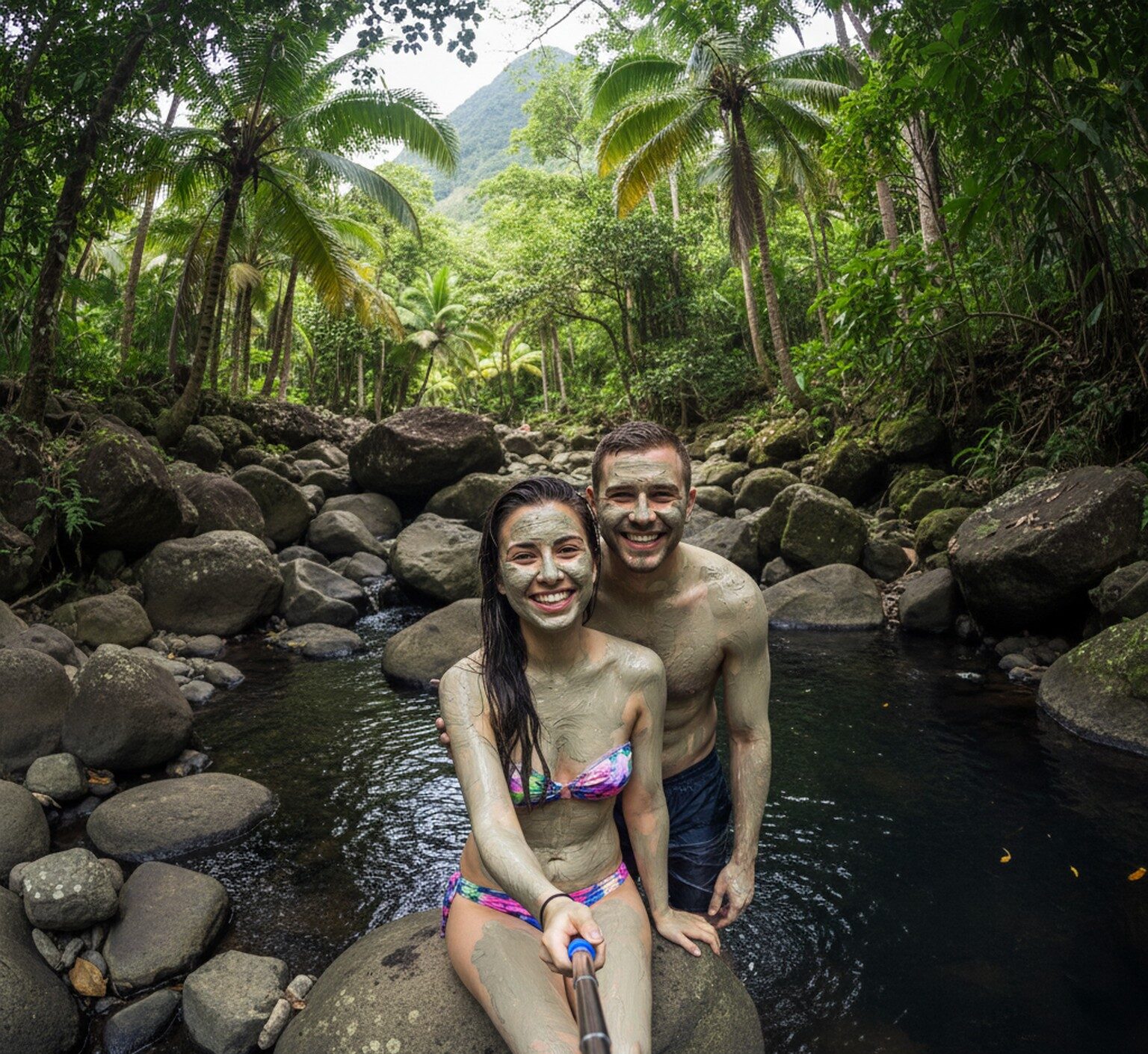
But here’s what nobody tells you before you visit this Caribbean gem: some of the most memorable, bizarre, and hilariously therapeutic experiences happen when you venture inland to the volcanic chaos of Soufrière. And by volcanic chaos, I mean the world’s only drive-in volcano – yes, you literally drive INTO a volcano – where you’ll cover yourself in hot sulfur mud, smell like rotten eggs for hours, and somehow emerge feeling like a brand new person.
My day exploring St. Lucia’s volcanic heart was nothing like the polished Instagram photos suggested. It was hotter, smellier, muddier, and way more wonderful than I ever expected. Let me walk you through what actually happens when you trade your beach towel for a mud-stained swimsuit and head to Soufrière.
The Drive to Soufrière Is Half the Adventure
First things first: Soufrière is on the opposite side of St. Lucia from where most tourists stay (Rodney Bay, Castries, etc.). This means you’re in for about an hour and a half of winding mountain roads with hairpin turns that would make even experienced drivers grip the steering wheel a little tighter.
I booked a tour through a local driver named Marcus that I found through my guesthouse, and honestly, that decision probably saved my sanity (and my rental car deposit). These roads are no joke – narrow, twisting, with buses somehow squeezing past each other on curves where you can’t see five feet ahead.
But here’s the thing: the drive is absolutely stunning. Like, pull-over-and-take-photos-every-five-minutes stunning. You’ll wind through tiny mountain villages with colorful houses clinging to hillsides, past banana plantations, and around corners that suddenly reveal breathtaking views of the Caribbean sparkling below. Marcus pointed out local fruit stands, told me stories about St. Lucian culture, and showed me shortcuts that tour buses couldn’t access.
Pro tip: If you’re debating between a resort tour package and a local driver-guide, go local. I paid Marcus $75 for a full-day private tour that resort guests told me later they paid $140 for through their hotel. Plus, local guides actually know things beyond the scripted tour speech.
The closer we got to Soufrière, the more I could smell it. That distinct rotten-egg scent of sulfur started wafting through the van windows, getting stronger with each turn. “That’s how you know we’re getting close,” Marcus laughed. “The volcano is saying hello.”
Welcome to the World’s Only Drive-In Volcano
Okay, so calling it a “drive-in volcano” might be slightly misleading. You’re not driving into an actual crater or anything that dramatic. But you do literally drive your vehicle right up to and through the volcanic area, which is pretty cool and definitely unique.
When we arrived at Sulphur Springs Park, I paid my entrance fee (about $12 USD) and was immediately hit with the full force of that sulfur smell. It’s… intense. Imagine if someone left a dozen hard-boiled eggs in the sun for a week. Now multiply that by about fifty. That’s the aroma we’re working with here.
The site itself is this otherworldly landscape of grey-brown earth, steam rising from various vents and cracks in the ground, and pools of boiling mud bubbling away like something from a sci-fi movie. It’s the dormant (thankfully!) Soufrière Volcano, and the geothermal activity creates this constantly steaming, slightly eerie environment.
There’s a small visitors’ center where they give you the safety briefing – stay on marked paths, don’t touch the boiling pools (duh), and prepare to sweat because the ambient temperature here is significantly hotter than the surrounding area thanks to all that underground volcanic heat.
“This volcano last erupted about 40,000 years ago,” our guide explained cheerfully, as if that was supposed to make me feel completely safe standing on top of it. “But the geothermal activity is very much alive!”
Yeah, I could tell. The ground was literally steaming beneath my feet.
The Geothermal Park Walk (Where Everything Smells)
Before you get to the fun mud bath part, there’s a guided walk through the geothermal park that takes about 20-30 minutes. And by “guided walk,” I mean your guide leads you around to various steaming vents and bubbling pools while explaining the volcanic geology and trying not to laugh at tourists’ faces when they realize just how strong that sulfur smell really is.
Our guide, a wonderful woman named Celeste, pointed out different features: the main crater (now a depression filled with steaming, multicolored mineral deposits), various fumaroles (steam vents) releasing gases that can reach 340°F, and several pools of mud that were literally boiling and popping like some kind of volcanic porridge.
“The smell is from hydrogen sulfide gas,” Celeste explained. “It’s the same compound that gives rotten eggs their smell. But don’t worry – at these concentrations, it’s harmless. You’ll get used to it.”
Spoiler alert: I did not get used to it. But after about ten minutes, my nose did kind of surrender and give up, which I suppose is close enough.
The landscape is genuinely fascinating if you can get past the smell. The ground is stained in shades of yellow, orange, grey, and rust-red from all the different minerals. Steam rises dramatically from cracks and vents. The boiling mud pools make this glorp-glorp-PLOP sound as they bubble. It’s like being on another planet, except that planet smells like Satan’s bathroom.
There were about twelve of us in the walking tour group, and I watched everyone go through the same progression: initial excitement, then nose-wrinkling at the smell, then acceptance, then genuine fascination with the geological weirdness of it all. One guy kept taking photos of every bubbling mud pool like he was documenting a major scientific discovery.
Pro tip: Don’t get too close to the boiling pools. I watched a tourist lean over one for a better photo and nearly lost their phone when the pool suddenly burped out a particularly aggressive bubble. Also, the steam can temporarily fog up glasses and phone cameras, so clean your lenses frequently.
Getting Down and Dirty in the Mud Baths
After the educational portion, we finally got to the part everyone actually came for: the mud baths. And let me tell you, this is where things get wonderfully weird.
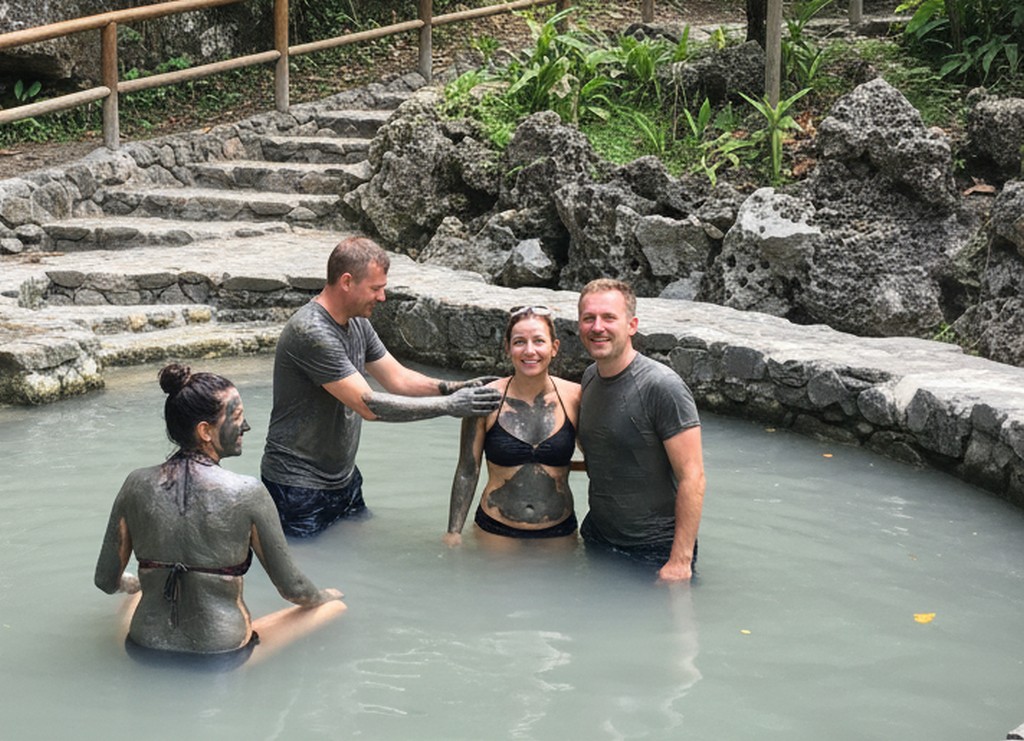
The mud bath area consists of several pools filled with warm (not boiling, thankfully) volcanic mud that’s been mixed with the sulfur-rich water to create this thick, grey, therapeutic sludge. The pools are heated naturally by the geothermal activity below, keeping them at a toasty 95-100°F.
We changed into our swimsuits in the basic but functional changing rooms (bring your own towel, by the way – this isn’t a luxury spa situation), and then it was time to get muddy. The pools aren’t huge – maybe hot-tub sized – so you’re definitely sharing space with other mud enthusiasts.
The first step is covering yourself in the mud. And when I say covering, I mean covering. Head to toe. Don’t be shy. The locals working there will happily help slather you with mud if you’re struggling to reach your back, and they’re not precious about it – they’ll just grab handfuls and start applying.
The mud itself feels… strange. It’s warm, silky, kind of heavy, and it gets EVERYWHERE. Under your nails, between your toes, in your ears if you’re not careful. I watched a woman accidentally get mud in her eye and spend the next five minutes trying to rinse it out with water from a provided bucket. It looked painful.
But here’s the magical part: once you’re fully covered and sitting in the mud pools, it’s actually incredibly relaxing. The heat soaks into your muscles, the minerals supposedly work their therapeutic magic on your skin, and something about being covered head-to-toe in volcanic sludge with a bunch of strangers is just… funny. Everyone’s laughing and taking ridiculous photos and embracing the absurdity.
I sat next to a couple from Toronto who were celebrating their anniversary. “This is definitely not what I pictured when he said ‘romantic Caribbean getaway,'” the wife joked, gesturing at her mud-covered body. “But honestly? I’m having the best time.”
The recommended soak time is about 15-20 minutes. Any longer and you might overheat from the warm mud and ambient volcanic heat. Several people in our group learned this the hard way and had to get out early because they felt dizzy.
What they say the mud does: Detoxifies skin, helps with arthritis and joint pain, treats eczema and other skin conditions, exfoliates dead skin cells, provides therapeutic minerals.
What I can confirm: My skin did feel incredibly soft afterward, and I have to admit, my usually achy shoulders felt noticeably better. Placebo effect? Maybe. Do I care? Not really. It felt good, and that’s what matters.
The mud bath itself costs an extra $8-10 on top of the park entrance, which is honestly a steal for the experience. Where else can you bathe in volcanic mud for less than the cost of a fancy coffee?
The Waterfall Rinse-Off Fantasy vs. Reality
Okay, so all the promotional materials show beautiful people rinsing off their mud under a picturesque waterfall, looking serene and refreshed, with the water cascading artfully around them like a luxury spa commercial.
The reality is… less graceful.
After your mud soak, you’re directed to walk (still covered in mud, squelching with every step) over to a nearby waterfall for the rinse-off portion of the experience. This isn’t some gentle tropical shower – it’s a legit 50-foot waterfall with pretty decent water pressure.
Our group trudged over to the waterfall, looking like a parade of grey swamp creatures, leaving muddy footprints on the stone path. When you get under that waterfall, the cold mountain water hits you with surprising force, and suddenly you’re frantically scrubbing at mud that seems determined to stay attached to your skin.
It takes WORK to get this mud off. It’s not a gentle, relaxing rinse – it’s a full-body scrubbing situation where you’re using your hands, the force of the waterfall, and sheer determination to remove layers of volcanic clay. My hair was probably the worst part. I thought I’d kept it relatively mud-free, but nope – I found grey streaks for the next two shampoo sessions.
The waterfall rinse-off is actually super fun though, despite being a bit chaotic. Everyone’s laughing, helping each other spot missed patches of mud (“You’ve still got some on your back!”), and taking turns under the best water flow spots. It’s communal and silly and weirdly bonding.
There are also some basic showers available if you prefer a more controlled rinse, but honestly, where’s the adventure in that? You’ve already covered yourself in volcanic mud – might as well go all-in on the experience.
Pro tip: Bring a hair tie if you have long hair, and maybe a swim cap if you’re really concerned about keeping your hair clean. Also, the waterfall area can be slippery, so watch your footing. I saw at least two people do that cartoon-style slip-and-slide thing on the wet rocks.
The Botanical Gardens: A Surprisingly Delightful Detour
After all the volcanic excitement, most tours include a visit to the nearby Diamond Botanical Gardens, and I have to say, this was an unexpectedly lovely palate cleanser after all the sulfur and mud.
The gardens are located on the historic Soufrière Estate and feature these beautiful paths winding through tropical plants, flowers, and trees. But the real star is the Diamond Waterfall – a stunning cascade where the water is stained various shades of yellow, orange, and purple from the volcanic minerals in the area.
It’s genuinely gorgeous, and the perfect spot for non-muddy photos if you want something Instagram-worthy to balance out all those mud monster pictures from earlier. The gardens also have mineral baths if you want one more soak (these ones are clearer and less… muddy), though by this point I was thoroughly soaked-out.
There’s also a nearby trail called Tet Paul Nature Trail that some tours include instead of or in addition to the botanical gardens. It’s a moderate 45-minute hike with absolutely spectacular views of the Pitons and the surrounding countryside. If you’re into hiking and not too exhausted from your volcanic adventure, it’s worth adding on.
Marcus, my driver, also took me to a local restaurant in Soufrière where we had the best fish and plantains I’ve eaten in my entire life for about $15 USD. This is another advantage of going with a local guide – they know where actual St. Lucians eat, not just the tourist traps.
You’ll Smell Like Sulfur (And Everyone Will Know)
Here’s the part they don’t mention in the brochures: no matter how thoroughly you shower, scrub, and rinse at the end of your volcanic adventure, you will smell like sulfur for the rest of the day. Maybe longer.
On the drive back to my guesthouse, I became increasingly aware that I smelled like rotten eggs. Marcus was too polite to say anything, but I caught him cracking his window. When I got back to my room, my roommate walked in, made a face, and said, “Did you go to the volcano today?”
“How did you know?”
“You smell like science class,” she replied.
Three showers later, the smell had mostly dissipated, but I still caught occasional whiffs of sulfur for the next 24 hours. My swimsuit retained the smell even longer – I had to wash it multiple times before it returned to normal.
But you know what? It was completely worth it. That lingering sulfur smell became a badge of honor, proof that I’d done something genuinely unique and adventurous rather than just lounging at the beach (though I did plenty of that too, let’s be real).
So, Should You Trade Your Beach Day for a Volcano Day?
Absolutely, 100%, without question, YES.
Look, St. Lucia’s beaches are beautiful. The resorts are luxurious. The rum punches are delicious. You should definitely enjoy all of those things. But if you spend your entire trip at the beach, you’ll miss out on one of the most unique, bizarre, therapeutic, and memorable experiences the Caribbean has to offer.
The Soufrière volcanic area isn’t polished or glamorous. It smells weird, gets you dirty, and involves more physical scrubbing than you’d expect. But it’s real. It’s the kind of experience that makes you feel like you actually went somewhere and did something, not just observed from a safe, sanitized distance.
Plus, where else can you say you drove into a volcano, bathed in naturally heated mud that’s supposedly been there for 40,000 years, rinsed off under a waterfall, and emerged smelling like rotten eggs? That’s a story worth telling.
Practical Information for Your Volcanic Adventure
What It Costs:
- Park entrance: ~$12-15 USD
- Mud bath experience: ~$8-10 USD additional
- Full tour packages (including transport, guide, mud bath, waterfall, gardens): $45-120 USD depending on whether you book locally vs. through a resort
- Local lunch: $10-15 USD
- Your dignity: Temporarily surrendered but fully recoverable
What to Bring:
- Old swimsuit (the sulfur might discolor it)
- Towel (not always provided)
- Waterproof bag for phone/camera
- Hair ties for long hair
- Sunscreen (reapply after rinse-off)
- Water bottle
- Sense of adventure
- Willingness to smell like eggs
What to Leave Behind:
- Jewelry (sulfur can tarnish metals)
- Expensive swimwear
- Any expectation of staying clean and composed
- Your usual personal space boundaries
Best Time to Go: Morning tours (8-9 AM start) beat the midday heat and cruise ship crowds. Afternoon tours are less crowded but hotter. The dry season (December-April) offers the most reliable weather, though the mud baths operate year-round.
Tour Options:
- Resort packages: $100-140 (convenient but pricey)
- Local driver-guides: $60-90 (better value, more authentic)
- Independent visit: Park entry + mud bath = ~$25 total, but you need transportation
How Long It Takes:
- Half-day tours: 4-5 hours total
- Full-day tours: 7-8 hours (including lunch, extra attractions)
- Actual time at volcanic site: 1.5-2 hours
The Bottom Line:
The Soufrière volcanic experience is messy, smelly, hot, hilarious, and absolutely one-of-a-kind. It’s not a relaxing spa day – it’s an adventure. You’ll get dirty, sweat profusely, smell like sulfur, and probably laugh more than you have in months.
Your beach lounging will still be there tomorrow. Today, go cover yourself in volcanic mud and rinse off under a waterfall like the adventurous, slightly crazy person you came to the Caribbean to be.
Total cost for a full-day volcanic adventure: $80-150 USD depending on your choices
Number of photos that will make your friends say “WHAT are you doing?”: At least a dozen
Likelihood you’ll tell this story for years: 100%
Trust me, your future self will thank you for choosing the volcano over another day at the beach. Well, once the sulfur smell wears off, anyway.
